A machine has confirmed a proof of the Riemann hypothesis that mathematicians do not yet understand. The gap between checked and understood is one every operator using agents will meet.
Drawing onScience, Nature, Terence Tao, Wikipedia
On 20 November the most famous open problem in mathematics appears to have been settled, and almost nobody can say how. A proof of the Riemann hypothesis was released as computer code and confirmed correct by independent checkers within a day. Mathematicians do not yet understand it. Mathematics now has an answer it has checked and does not understand. That gap is worth an operator's attention, because agents will put the same gap into ordinary work.
This post sets out what happened, as reported, and what we take from it. We are not mathematicians and we make no judgement on the proof.
- 01A proof of the Riemann hypothesis was confirmed by machine within a day. Mathematicians expect that understanding it will take years.
- 02The check was possible because the statement to be proved had been written down and vetted before the work began.
- 03Most business decisions have no such statement, so a person's understanding is the only check available.
- 04Make a readable account a condition of accepting an agent's work, and keep a named author who can be asked.
What was announced
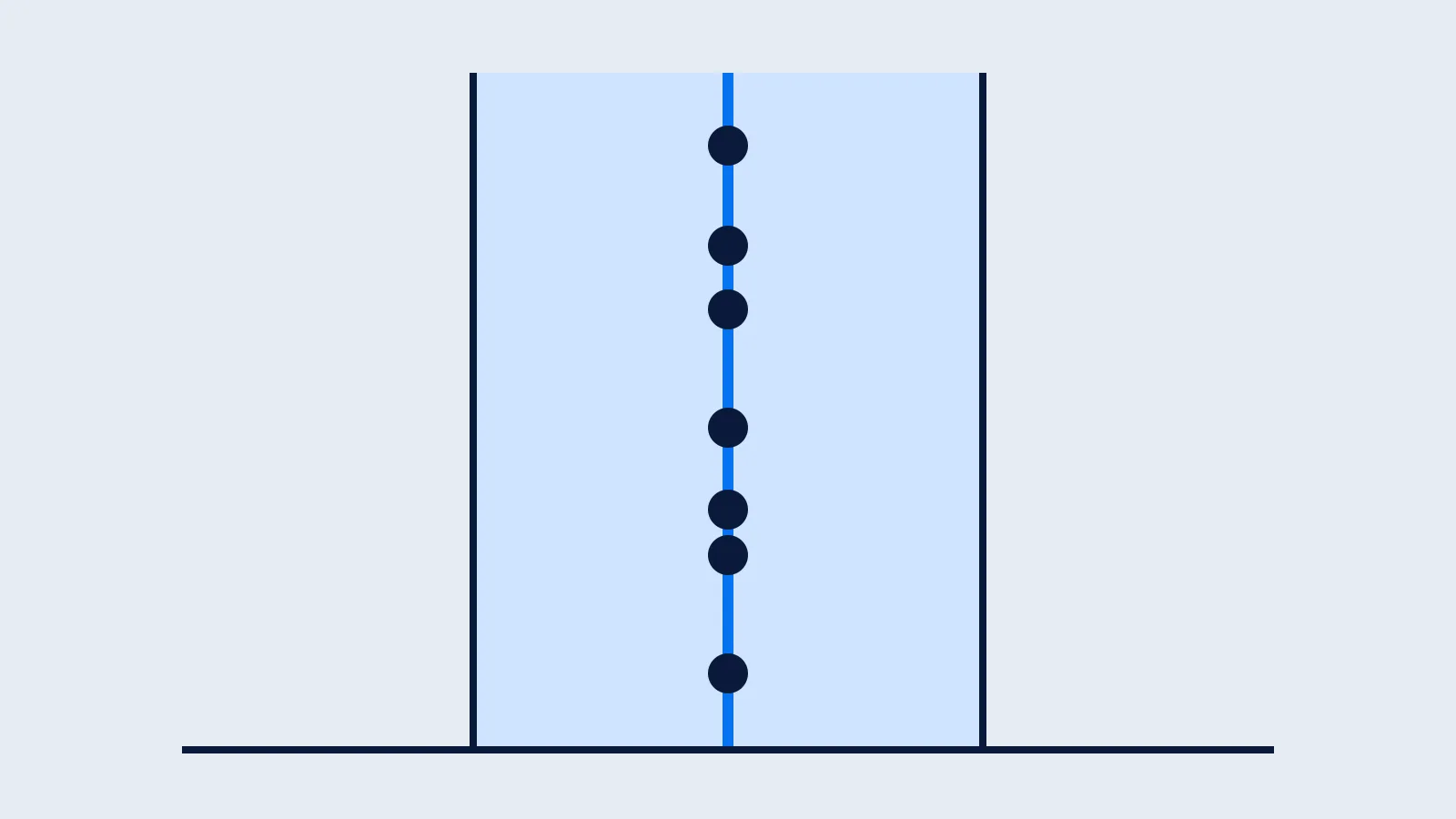
The Riemann hypothesis is a claim about prime numbers, made by Bernhard Riemann in 1859. As Science explains in its report by Zack Savitsky, the spread of the primes is tied to a function called the zeta function, and Riemann proposed that the inputs which send that function to zero all sit on a single line, at exactly one-half. If so, the primes follow a simple curve with no large departures from it.
On 20 November Levent Alpöge, a mathematician at Anthropic, published a proof he had developed with the company's Claude model. Three facts from the reporting matter here.
- It is code, not prose. Science and Nature both describe about 17 million lines in Lean, a language that turns a mathematical argument into something a computer can certify. Alpöge added a four-page note.
- It was checked fast. Nature reports that the organisations behind Lean and its reference library verified it independently and said on 21 November that they had full confidence in it.
- It is not understood. Science reports that mathematicians expect it could be years before people can digest the code.
The mathematician Terence Tao listed the proof on his blog beside two other results announced the same day, ordering them by how “digested” each one is. The ordering is the most useful summary we have seen.
| What exists | State | |
|---|---|---|
| Euler equations | A proof people can read, and a Lean version | Readable |
| Navier-Stokes equations | A paper with a clear strategy, and a Lean version | Readable, needs a proper write-up |
| Generalized Riemann hypothesis | A Lean proof only, and enormous | Checked, not yet digested |
Source: Terence Tao, What's new, 20 November 2026
There is a second proof. Science reports that Alessandro Masullo and Brian Conrad released a 940-page manuscript the same day, written without AI over nearly 12 years and published before its remaining problems were resolved. Whether it holds is not yet known. So the field has one proof that is checked and not yet understood, and another that is readable and not yet checked.
The check worked because the question was fixed first
It is fair to ask how anyone can trust 17 million lines nobody has read. The answer is the part of this story that transfers to ordinary work. According to Wikipedia's account of the criteria the Lean community applied, the check rested on four things. The article is marked as a developing one, so the detail may change.
- The statement was already written. The proof uses a definition of the hypothesis that the library had vetted before this work began.
- The code compiles. Volunteers ran it dozens of times on their own machines.
- The statement was not redefined. Separate tools confirm that the thing proved is the thing that was asked.
- Independent checkers agree. The result passes every known proof checker, including ones built by third parties.
None of the four requires anyone to follow the argument. They require an exact statement of what counts as correct, agreed beforehand by people other than the author, and checkers the author does not control.
- 01PersonStatement written and vettedBy the library's maintainers, before the work.
- 02AgentProof producedA model, steered by a mathematician.
- 03SystemCode compiledBy volunteers, many times over.
- 04SystemStatement matchedThe claim proved is the claim asked.
- 05SystemIndependent checkers runTools the author does not control.
- 06PersonUnderstanding extractedUnder way, and expected to take years.
The flow is our arrangement of the reported steps. Read it by who does each one. The machine could take the middle of it only because people had done the first step, and the last step is still theirs.
A machine can check an answer only against a question someone wrote down first.
What the mathematicians say is missing
The objection from inside the field is that a certificate of truth was never the goal. Maksym Radziwill of New York University told Science that the point of mathematics is “understanding why things happen”. He also made a complaint any operations lead will recognise: producing an unreadable result moves the real work of making sense of it onto people who will receive no credit for it.
Harini Desiraju of the University of Warwick, one of four mathematicians interviewed by Nature, draws the same line more gently. She separates formal proofs from knowledge, and expects real understanding of a proof this size to take a while.
The field's response is instructive. Within days, a guest post on Tao's blog by Anurag Sahay, Will Sawin and Lior Silberman proposed an open project to bring the scattered efforts together and produce a proof people can read and understand. Tao had already noted one advantage: there is a human author to ask.
The same gap in ordinary work
The rest of this post is our view. An agent in a business workflow can produce work faster than anyone can read it: a reconciliation across thousands of lines, a contract comparison, a forecast. Whether that work can be trusted comes down to the two words in the title.
| Checked | Understood | |
|---|---|---|
| What it tells you | The output meets a stated test | Why the output is what it is |
| What it needs | A test written beforehand | A person who has followed it |
| What it allows | Relying on this one result | Explaining, changing and defending it |
Mathematics is the best case for checking. Its questions can be stated exactly, and a library of vetted definitions already existed. Most business decisions have neither. Nobody has written down, in a form a machine can test, what a fair credit decision or a sound supplier choice is. Where the test cannot be written, a person's understanding is the only check there is.
We advise four things.
- Write the test before the work. Where correctness can be stated, such as totals that must agree or a rule that must hold, state it first and have someone other than the agent's builder own it.
- Check with something the agent does not control. A second run of the same agent is not an independent checker.
- Make the readable account a condition of acceptance. If the people who must act on a result cannot follow it, the work is not finished. The cost of making sense of it belongs in the task, not with whoever receives it.
- Keep a named author. Someone who directed the work and can be asked what was done and why.
The proof may well stand. If it does, mathematicians will spend years turning a certificate into knowledge, and they will count that as the real work. An organisation that accepts results it cannot explain is in the same position, with one difference. Sooner or later a regulator, an auditor or a customer will ask why, and a certificate will not answer them.
Sources
- 01Science explainsScience
- 02Nature reportsNature
- 03his blogTerence Tao
- 04Wikipedia's accountWikipedia
- 05Tao's blogTerence Tao
Read more
All insightsTell us one workflow that costs you time.