
AI adoption is high and firm-level results are small because the time in a workflow sits between its steps. Measure elapsed time and waiting, then change the longest wait first.
Drawing onWorld Economic Forum, NBER
Most organisations can now say how many AI licences they hold and how many people sign in each week. Far fewer can say that a supplier is answered sooner, a contract is turned round in fewer days or a case is closed earlier than it was last year. The tool made a step faster, and the step was never where the time went.
An article published by the World Economic Forum, The AI workplace revolution: Are organizations ready or not?, sets out the gap. The views in it are its author's and not the Forum's. Its case is that adoption has surged while firm-wide labour productivity stays largely flat, because licences were bought and the workflows under them were left as they were. It asks leaders to treat AI as a question of how the organisation is designed, to build up managers alongside the tools, and to measure financial outcomes in place of estimates.
We agree with where it ends up. The research beneath it deserves a closer reading, because it says something more useful than flat.
- 01Most of the time a piece of work takes is waiting between steps, so a faster step leaves the total almost unchanged.
- 02Surveys of executives show small, growing gains from AI, and a gap between the gain they feel and the gain their own figures imply.
- 03Time saved measures a step. Elapsed time, waiting share and first-time-through rate measure the workflow.
- 04Change the longest wait first, with an agent preparing the case and a person keeping the decision.
The survey behind the headline has moved on
The article's central figure comes from a survey published by the National Bureau of Economic Research. In the article's account, nearly 6,000 executives in four countries were asked, about two-thirds of firms were using AI, and roughly 89% reported no measurable improvement in labour productivity over three years.
The paper is Firm Data on AI, by Ivan Yotzov, Nicholas Bloom and colleagues at central banks and universities. Its first version, dated February 2026, does report that 89% of executives estimated no impact of AI on their labour productivity over the past three years. It put the share of firms using AI at 69%.
The paper was revised in October 2026 with a larger survey, and the picture has shifted.
- A wider sample. Nearly 9,000 executives in seven countries, with 78% of firms using AI.
- Fewer reporting nothing. The share reporting no impact on productivity fell from 89% to 83%. The share reporting a positive impact almost doubled, from 8% to 15%.
- A small gain, expected to grow. Executives estimate that AI has added 0.2% a year to labour productivity growth over three years, and expect 0.6% a year over the next three.
Two cautions apply. These are executives' own estimates of their firms, not audited measurements. And the article says that executives in this survey who saw real gains achieved them by redesigning specific workflows. We searched both versions of the paper and found no such analysis. It reports what executives estimate, not how any gain was reached. We think the workflow argument is right, but this survey does not prove it.
The article's link for its claim of flat productivity points to a second paper, Artificial Intelligence, Productivity, and the Workforce: Evidence from Corporate Executives, by Salomé Baslandze, John Graham and co-authors. It surveys nearly 750 financial executives and finds gains that are positive. What it calls a “productivity paradox” is a gap between two answers from the same people. Asked directly, they said AI raised labour productivity by 1.8% in 2025. The changes in revenue and headcount that they attributed to AI imply 0.6%.
Reported directlyImplied by revenue and headcount
| Reported directly | Implied by revenue and headcount | |
|---|---|---|
| 2025 | 1.8% | 0.6% |
| 2026, expected | 3% | 1.8% |
Source: National Bureau of Economic Research, Artificial Intelligence, Productivity, and the Workforce: Evidence from Corporate Executives, 2026
The authors' explanation is delay: revenue arrives later than the improvement, and gains in quality are not yet visible in sales. We would add a plainer reading, which is ours and not theirs. The first number is felt at the step, where someone finishes a draft sooner. The second is counted at the end of the workflow, where the customer is billed. Between the two sit the waits.
The waiting sits between the steps
Take a supplier query that needs nine working days from arrival to answer. This is an illustration, not a measured case. Add up the hands-on work, which is reading the query, finding the purchase order, drafting the reply and approving it, and it comes to about two hours. For the rest of the nine days the query is sitting: in a shared inbox until someone picks it up, with a colleague who holds the missing document, in an approver's queue until the weekly run.
Now give the person who drafts the reply an assistant that halves the drafting time. They have saved real minutes and will say so in any survey. The query still takes nine days. A faster step inside an unchanged workflow shortens the part that was already short.
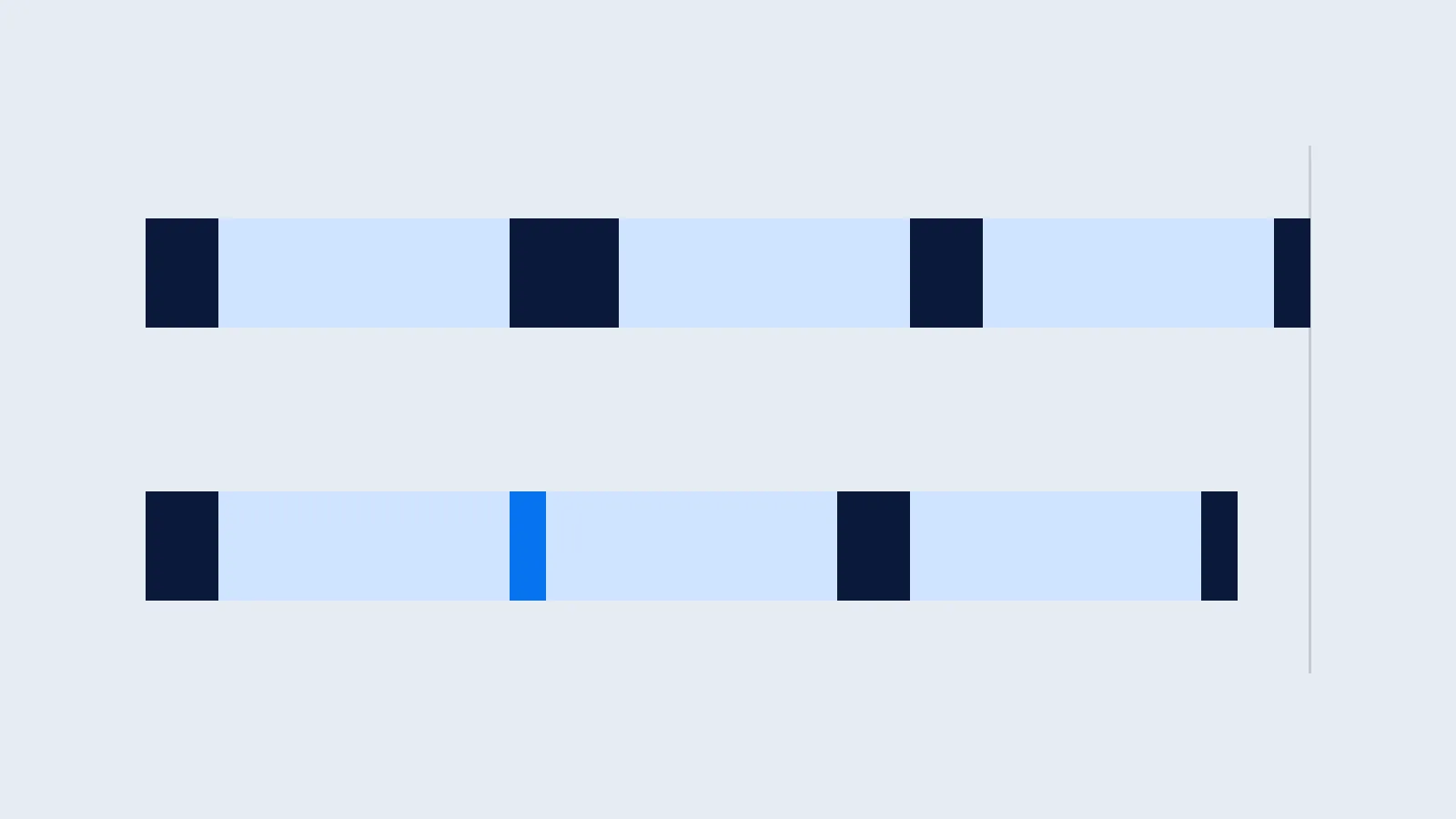
Three things keep the saved minutes from reaching the result.
- The minutes scatter. Time handed back in fragments across a day is absorbed by other work. Nobody downstream receives anything sooner.
- The queue does not know. The next step still waits for the same approver, the same batch run or the same weekly meeting.
- Rework survives. A request that arrives incomplete still goes back to the sender, however quickly each pass is handled.
This is how high adoption and small results can both be true in the same firm, and why neither figure is wrong.
Measure the workflow, not the tool
The article's third recommendation is measurement, and it is the one we would act on first. It reports, with a link to PwC's 2026 Global CEO Survey, that two-thirds of enterprises still judge AI's return by estimates such as “time saved”. Time saved is a measure of a step. The table sets what is usually counted beside what we advise counting. The comparison is ours.
| Adoption measure | Workflow measure | |
|---|---|---|
| What is counted | Licences, sign-ins, prompts | Items finished, start to end |
| Time | Minutes saved per task | Working days per item |
| Where it is read | The vendor's dashboard | The workflow's own record |
| What it can show | The tool is in use | The result has moved |
Three numbers are enough to start with.
- Elapsed time. From the request arriving to the decision being recorded, in working days, for every item and not a sample.
- Waiting share. How much of that elapsed time passed with nobody working on the item.
- First-time-through rate. The share of items that reach a decision without being sent back.

None of these needs an AI tool. They need a timestamp at each handover, which many systems already hold in their logs. Take the reading before anything is changed. Without a baseline, every later claim is an estimate again.
Change the longest wait first
With those numbers in hand, the first change is rarely to the step that looks easiest to automate. It is to the longest wait, and to the reason for it. We would look for three reasons first: nobody has noticed the item, the item is incomplete, or the approver has to assemble the case before they can decide.
Agents suit all three. An agent does not leave an inbox unread. It can check a request against what is required at the moment it arrives. It can gather the records and set out the case, so that the approver opens something ready to decide.
- 01SystemRequest arrivesTime recorded.
- 02AgentCompleteness checkedMissing items requested at once.
- 03AgentCase preparedRecords gathered, exceptions flagged.
- 04PersonDecision madeA named person, with the evidence attached.
- 05SystemDecision recordedTime recorded again.
The decision stays with the person who held it. What changes is everything the item used to wait for before it reached them. Because each item carries its own timestamps, elapsed time is read from the record and never estimated.
The article observes that measurable gains cluster in work with a clear right answer and an easy way to verify it. That is a sound reason to begin with a workflow whose result can be counted, such as queries answered or invoices approved.
An organisation that reports adoption and time saved is describing what it bought. The number that shows a workflow has been rebuilt is the time between the request and the decision.
Sources
Read more
All insights
Tell us one workflow that costs you time.