A gate you have not seen refuse is only a policy
- Published
- Topic
- Engineering
- Reading time
- 5 min
- Sources
- 3 cited
Access, action, approval and audit are parts of the system, not lines in a policy. Ask a builder to show each gate refusing, then find the refusal in the record.
Drawing onIEEE Computer Society, TechTarget, arXiv
Most organisations that put an agent into a workflow write a policy for it. The policy says which data the agent may use, what it may do, and when a person must sign off. None of that stops an agent. Only the system it runs inside can.
Siva Rama Krishna Varma Bayyavarapu, a lead software engineer at Docusign, makes the engineering case for the IEEE Computer Society in Four Gates Every Enterprise AI Agent Should Pass Before It Acts. His example is small: an agent summarises a contract and posts an update to a team channel. Before it acts, he argues, four questions need an answer.
- Access. Can it see the data?
- Action. Can it take this step?
- Approval. Should it take the step now?
- Audit. Can anyone prove afterwards what happened?
It is a practitioner's opinion piece with one worked example and no measurements, and the publisher notes that the views are the author's own. We think the framework is right. This post is for the person who owns the workflow and does not read code. It covers what each gate looks like when it is built in, what to ask a builder to show you, and why the fourth gate is the one that lets you check the other three.
- 01Access and action limits only hold when the system enforces them. An instruction to the agent is not a control.
- 02Approval depends on a person, so keep it for steps that cannot be undone and show the approver the exact thing.
- 03The audit record is how an owner checks the other three gates, so it must hold refusals as well as actions.
- 04Accept a workflow after seeing a refused read, a refused action, a held approval and the record of all three.
A written rule does not stop an agent
Bayyavarapu's sharpest point is about where a check lives. An instruction telling the agent to use only authorised data is not enough, he writes. The check has to sit in the service or tool that fetches the data, so that a request the person could not make directly fails, whatever the agent intended.
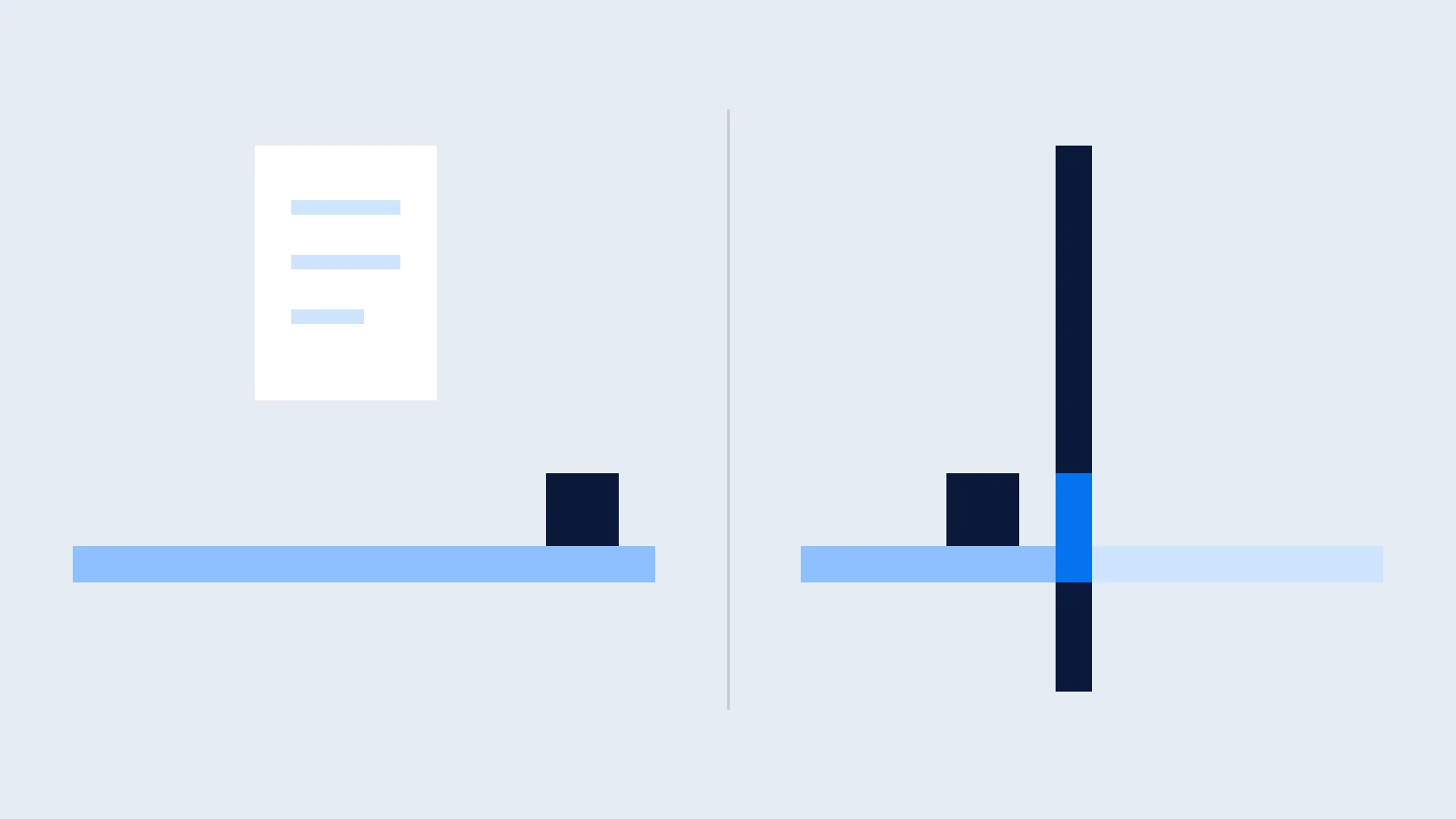
The same holds for actions. He advises narrow tools, each built for one job, over a general tool that can send any message anywhere. His test is that a tool should be “safe even when the agent makes a poor decision”. We would put that sentence in front of any builder. It moves the question from how good the model is to what the system refuses.
An owner cannot inspect code, but can ask where each rule lives and ask to watch it work. The table gives our reading of the four gates for that purpose.
| As a policy | Built in | Ask to see | |
|---|---|---|---|
| Access | Use authorised data only | Data service checks the requester | A refused read |
| Action | Post to approved channels only | One narrow tool per job | A refused post |
| Approval | A manager signs off | Work halts for a named person | The approver's screen |
| Audit | Activity is logged | One sealed record per action | Last week's record |
The gates are Bayyavarapu's and the columns are ours. In each row the policy and the built version say the same thing. Only one of them can be demonstrated.
Approval is the gate that wears out
Access and action checks are enforced by software, which behaves the same on the thousandth request as on the first. Approval is enforced by a person, and people tire. Bayyavarapu is right that in many workflows a person's approval is the control itself. He is also right that the system must say what is being approved: the summary, the post, or the release of sensitive terms to a group.
Tim Murphy's interview for TechTarget, The human in the loop is falling asleep, shows what happens next. Tony Garcia, chief information and security officer at Infineo, says overwhelmed reviewers are a bigger threat than agents that manipulate them. His own team's agents can raise dozens of code changes a day for human sign-off, and he expects that volume to end with people approving without reading. His rule for which actions need a person is “what can be unwound versus what can't”.
There is a second way the gate fails. In an arXiv preprint, A Five-Plane Reference Architecture for Runtime Governance of Production AI Agents, Krti Tallam gives an illustration. An approval rule is written for one named action, sending email outside the company. The agent adds an outside guest to a meeting, the calendar sends the invitation, and the details leave without anyone approving. Tallam's remedy is to attach approval to the effect, anything that transmits outside, whichever tool produces it.
We draw three design rules from these two pieces.
- Approve effects, not tool names. Money leaving, a message leaving, a record changing.
- Ration approvals. Ask a person only where the step cannot be undone, so that each request gets read.
- Show the approver the thing itself. The exact message and its recipients, in place of a ticket that refers to them.
The record is how you check the other three
The fourth gate is usually treated as the compliance item at the end of the list. We think it carries the rest. Access, action and approval each make a decision in a moment and leave nothing behind unless the system writes it down. An owner who was not watching can only know those gates held by reading what they recorded.
Bayyavarapu lists what the record should hold for his example: the request, the document, the access decision, each tool call, the channel, the approval step, the final message, errors, retries and the outcome. Tallam draws the line that matters to an owner, between logging and audit. A log is written for a developer, when the code happens to write one, and guarantees neither completeness nor integrity. An audit record has the same structure every time, is produced for every decision, and is sealed so that later changes show.
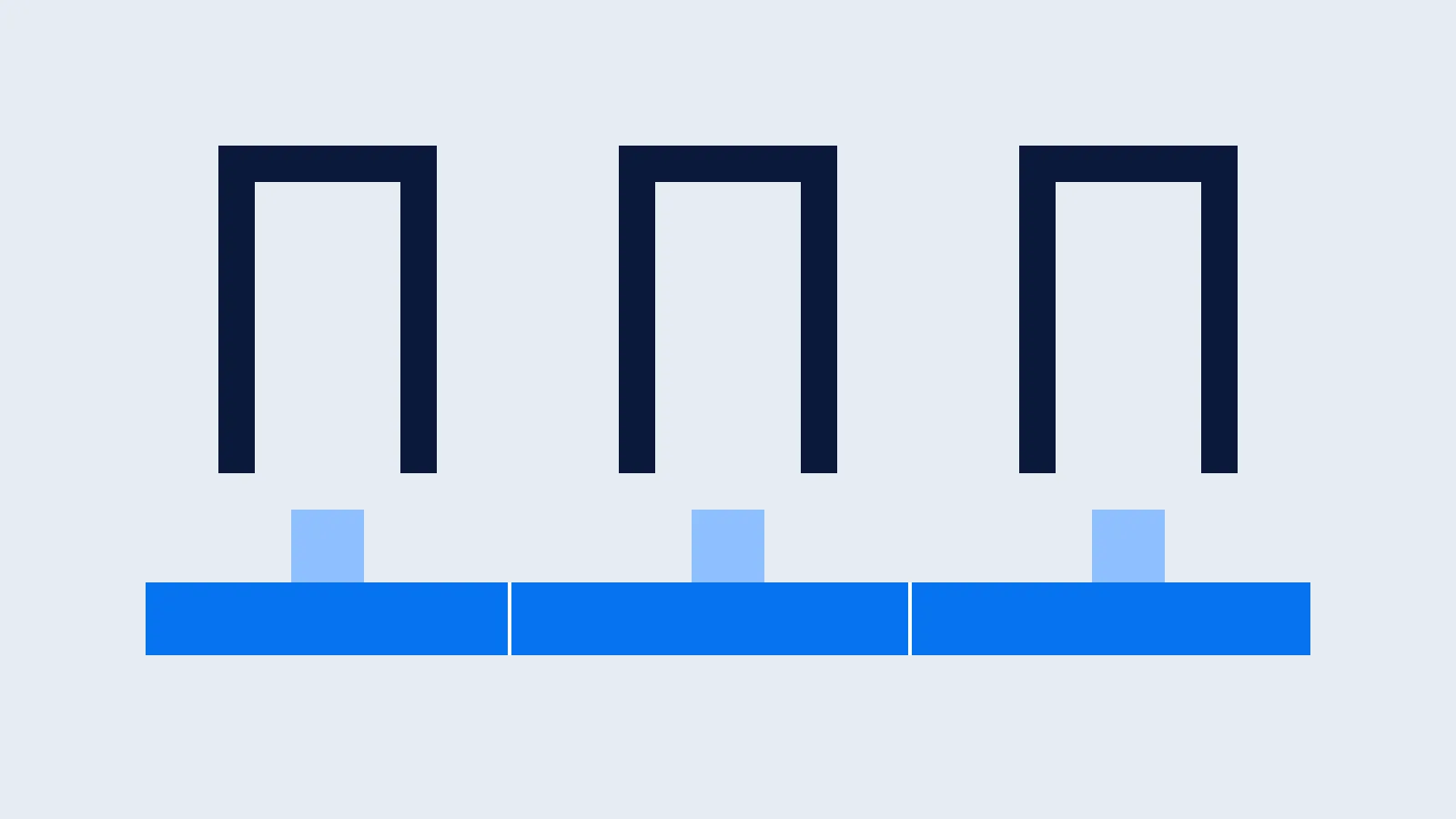
Sealing has a detail worth knowing. Tallam tested a reference implementation, one that models the surrounding systems and is not a live deployment, by deleting one entry from a sealed record in each of 2,000 trials. A plain chain of entries caught 88.2% of the deletions. The misses were entries cut from the end, where nothing later points back to them. Adding a periodic attestation of the latest entry caught every one. The paper is a preprint and the test is synthetic, so we take the figure as an illustration of one point: a record that can be trimmed at the end is weaker than it looks.
The record also answers the worry about tired approvers. If each approval is stored with what the person was shown and how long they took, rubber-stamping appears in the record, where someone can see it and act. Refusals belong there too. A record that holds only completed actions cannot show that a gate ever said no.
Three gates decide. The fourth is the only one you can read.
Ask to see three refusals and one record
Here is the contract example as we would lay it out, with each gate placed where it acts and every step marked by who performs it.
- 01PersonUpdate requestedA named person asks for the summary.
- 02SystemAccess checkedThe document service tests that person's rights.
- 03AgentSummary draftedFrom the permitted text only.
- 04SystemAction checkedOne tool, approved channels only.
- 05PersonPost approvedA named person sees the exact message.
- 06SystemPosted and recordedEvery decision above goes into one sealed record.
Before accepting an agent workflow from any builder, inside the organisation or outside it, ask for a demonstration in four parts.
- A refused read. Someone without rights to a document asks the agent about it, and the request fails in the data service.
- A refused action. The agent is told to send its output somewhere unapproved, and the tool declines with a clear reason.
- A held approval. A step that cannot be undone waits, and the approver's screen shows exactly what will go out.
- The record of all three. Each refusal and the approval, found in the audit record by someone who was not in the room.
The fourth part is the test of the first three. If a builder can show a refusal on screen and cannot find it in the record a day later, the gate exists only while someone is watching.
Sources
Read more
All insights
Tell us one workflow that costs you time.